



Smoking damages the lungs in three primary ways: it destroys lung tissue and airways, significantly increases the risk of lung cancer, and reduces the lungs' ability to exchange oxygen.
These effects begin within the first year of smoking and can become irreversible after a decade of regular tobacco use.
Quitting at any stage slows further damage and allows partial recovery. Below are the 3 key things you need to know.
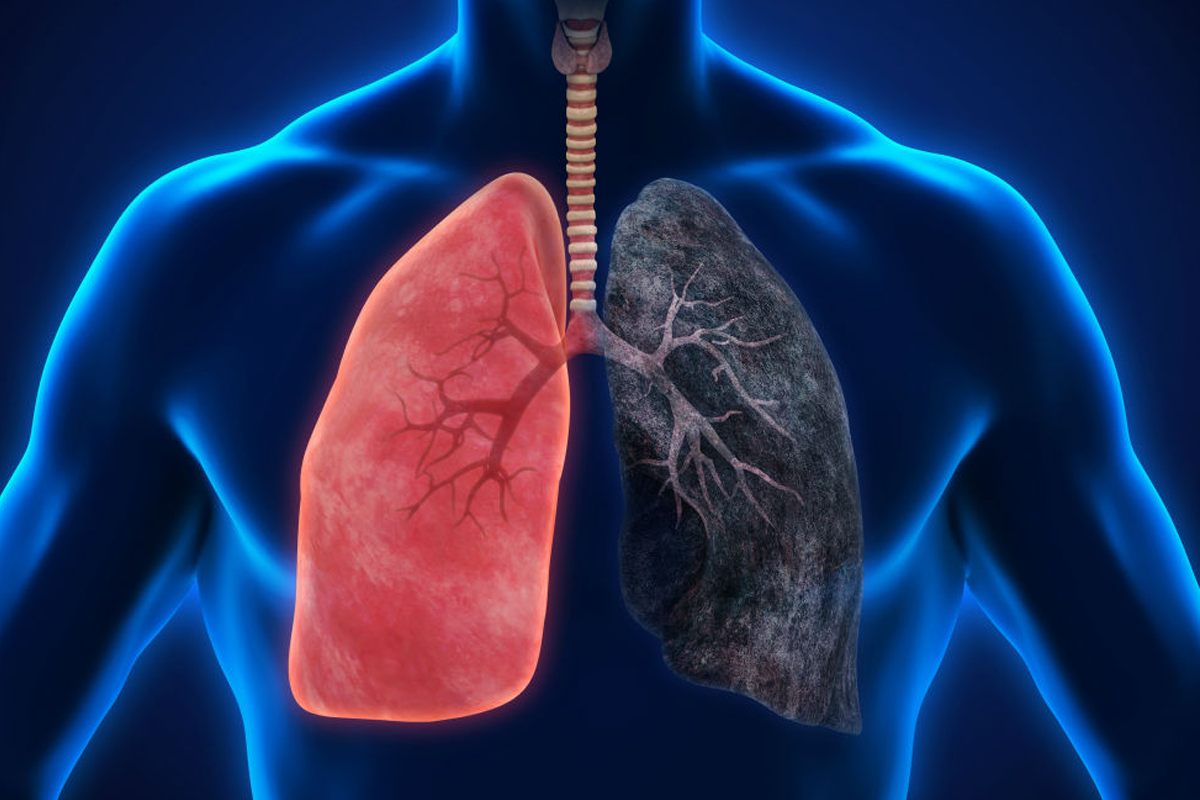
[Source: Regency Healthcare]
At a Glance: Everything You Need to Know About Smoking and Your Lungs
|
Topic |
Key Takeaway |
|
Effects of smoking on lungs |
Destroys tissue, increases cancer risk, reduces lung function |
|
Lungs timeline |
Damage begins in year 1, worsens at year 3, becomes irreversible by year 10 |
|
Smoker vs non-smoker lungs |
Discolored, scarred, reduced oxygen exchange and weakened immunity |
|
Benefits of quitting |
Halts damage, lungs begin healing within weeks of cessation |
|
Clearing tar from lungs |
Hydration, antioxidant rich foods, exercise, and Healeo Lung Forte |
What Are the 3 Key Things to Know About How Smoking Affects Your Lungs?

Smoking affects the lungs in three significant ways: by destroying tissue and narrowing airways, increasing the risk of lung cancer, and reducing the lungs' capacity to exchange oxygen efficiently.
Together these three effects progressively worsen with continued smoking and can lead to permanent respiratory damage.
1. Damage to Lung Tissue: Tobacco smoke contains thousands of chemicals that irritate and inflame lung tissue, leading to conditions like chronic bronchitis and emphysema.
-
Tobacco smoke contains thousands of chemicals that irritate and inflame lung tissue
-
Chronic swelling of the airways makes it increasingly difficult to breathe
-
Over time the destruction of lung tissue leads to chronic bronchitis and emphysema
Learn more about 10 Tips On How To Clean Lungs After Smoking.
2. Increased Risk of Lung Cancer: Smoking is the leading cause of lung cancer worldwide, with carcinogens in tobacco smoke directly damaging DNA inside lung cells and triggering uncontrolled abnormal cell growth.
-
Tobacco smoke contains carcinogens that directly damage DNA in lung cells
-
Accumulated DNA damage causes abnormal cells to grow uncontrollably
-
Risk increases with the duration and intensity of smoking, even light smoking contributes
3. Impaired Lung Function: Smoking progressively reduces the lungs' ability to exchange oxygen and carbon dioxide, resulting in symptoms that worsen over time and can become irreversible.
-
Causes shortness of breath especially during physical activity
-
Leads to persistent coughing and wheezing
-
Long term damage reduces quality of life and may become permanent
By understanding the impact of smoking on lung health, individuals can make informed decisions to protect their respiratory system and overall well-being.
Click to know about The 10 Best Foods for Optimal Lung Health.
Lungs Timeline: What Happens After 1, 3, and 10 Years of Smoking?
Smoking causes measurable lung damage within the first year, with effects becoming increasingly severe and harder to reverse at the 3 year and 10 year marks.
Each stage brings distinct structural and functional changes that affect breathing, immunity, and overall respiratory health.

1. After 1 Year: Within 12 months of regular smoking, the early effects of smoking on your lungs become measurable. Your lungs begin to show the early signs of damage.
Tar, a sticky, toxic residue from cigarettes, starts coating the inside of your lung walls, making it harder for oxygen to pass through the air sacs (alveoli).
What happens in this stage:
-
Cilia (tiny hair-like filters) in your lungs begin to slow down or die off, allowing more mucus and toxins to settle.
-
You may notice frequent throat clearing, occasional shortness of breath, and morning cough.
-
Inflammation sets in silently, even before you realize it.
While this stage still offers a chance for reversal if you quit, continued smoking leads to deeper tissue damage.
2. After 3 Years: After three years, the effects of smoking on your lungs become more pronounced. Your lungs experience noticeable structural and functional changes. The once-flexible lung tissue becomes stiffer, and airway linings are chronically inflamed.
What typically happens by now:
-
You begin to experience persistent shortness of breath, especially during physical activity.
-
Smoker’s cough becomes a daily ritual, especially in the mornings.
-
Excess mucus production, chest tightness, and a weakened immune defense make you more prone to bronchitis and respiratory infections.
-
Tar buildup becomes visible in lung X-rays, and cilia regeneration becomes slower even if you quit.
By this stage, lung damage is still partially reversible but long-term healing requires effort and detox support.
3. After 10 Years: A decade of smoking leads to severe and often irreversible effects of smoking on your lungs.
The lungs are now blackened with tar, showing major signs of cellular and structural deterioration. Air sacs are damaged, and the elasticity of the lungs is greatly reduced.
What happens after 10 years:
-
High risk of developing chronic obstructive pulmonary disease (COPD), emphysema, or lung fibrosis.
-
Lung cancer risk increases up to 20 times compared to non-smokers.
-
Tar deposition reaches dangerous levels nearly 1 kg in total for a pack-a-day smoker.
-
Permanent scarring of airways and reduced lung volume mean breathing becomes difficult even at rest.
At this stage, even if you quit, the lungs may not fully recover but cessation can still prevent further decline and improve life expectancy.
To know more about how a chronic smoker’s lung is different from a non smoker’s lung do give a read to this insightful blog.
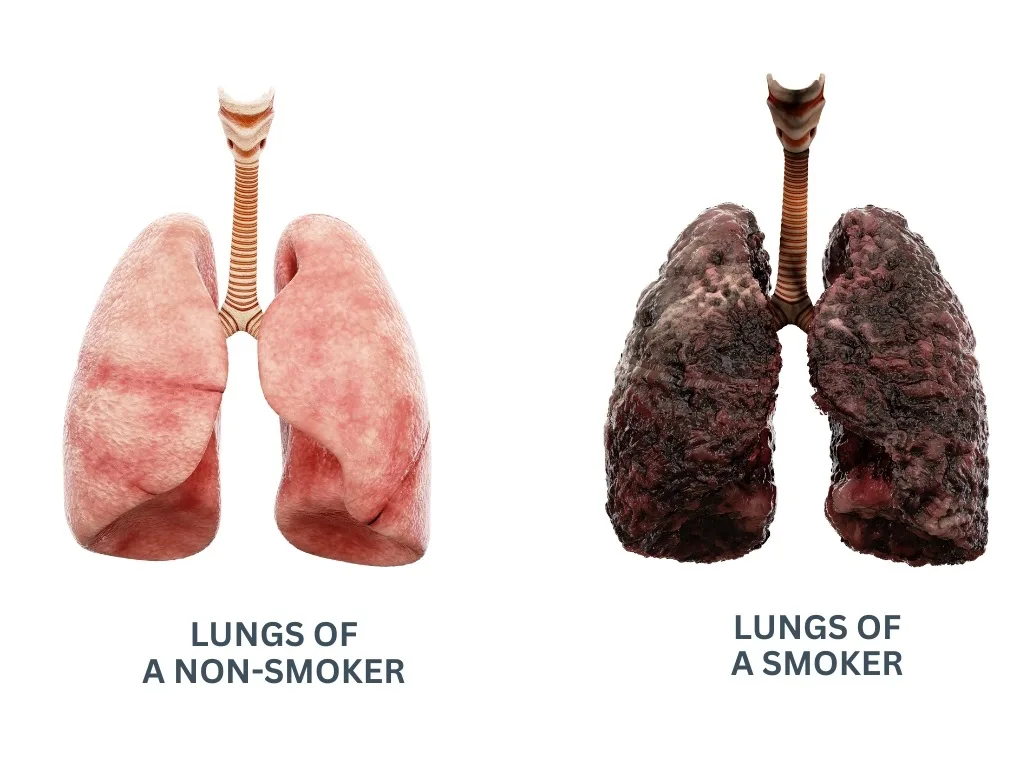
How Are Smoker's Lungs Different from Non-Smoker's Lungs?
Smoking causes visible and functional changes to the lungs that worsen progressively, from discoloration and scarring to reduced oxygen exchange and weakened breathing capacity.
|
Feature |
Healthy Lungs |
Smoker's Lungs |
|
Color |
Pink and spongy |
Gray or black, tar coated |
|
Alveoli |
Efficient oxygen absorption |
Inflamed and scarred |
|
Lung Shape |
Normal, symmetrical |
Distorted, uneven |
|
Cilia |
Active, clears mucus |
Paralyzed or destroyed |
|
Oxygen Exchange |
Full and unrestricted |
Reduced, scar tissue buildup |
|
Inflammation |
Minimal |
Chronic, infection prone |
|
Air Sacs |
Elastic, expands freely |
Stiff, air gets trapped |
|
Diaphragm |
Strong, full expansion |
Weakened, reduced efficiency |
Recognizing these differences highlights the importance of quitting early to slow or limit long term lung damage. (source)
How Does Quitting Smoking Benefit Your Lungs and Heart?
Quitting smoking is the single most effective step to stop further lung damage and allow the body to begin repairing itself, reducing the risk of COPD, lung cancer, and heart disease.

-
Tar and toxic substances begin to clear from the airways
-
Inflammation reduces and lung function gradually improves
-
Risk of developing COPD and lung cancer decreases significantly
-
Energy levels increase and exercise tolerance improves
-
Breathing becomes easier within weeks to months of quitting
-
Long term risk of lung and heart disease continues to decline over years
Though lung function may not return fully to that of a non-smoker, quitting at any stage prevents further decline and improves overall quality of life.
How Can You Clear Tar from Your Lungs After Smoking?
Clearing tar from the lungs after smoking requires a combination of lifestyle changes and targeted nutritional support to aid detoxification and restore respiratory function.
-
Drink plenty of fluids to help loosen and expel mucus
-
Eat antioxidant rich foods to combat oxidative damage from tar
-
Exercise regularly to improve lung capacity and circulation
-
Avoid secondhand smoke and air pollutants during recovery
-
Consider lung support supplements like Healeo Lung Forte, specifically formulated to aid tar detoxification and restore respiratory function
Can Healeo’s Lung Forte Help Clear Tar from Your Lungs?
Yes, Healeo’s Lung Forte is specifically formulated to support lung detoxification and respiratory recovery after smoking, complementing lifestyle changes for faster healing.

-
N-Acetyl Cysteine (NAC): A powerful mucolytic that breaks down mucus and tar buildup in the airways, aiding faster clearance from the lungs
-
Stinging Nettle Root Extract: Reduces airway inflammation and supports immune defense in smoke damaged lungs
-
Licorice Extract: Soothes irritated airways and supports natural mucus expulsion from the lungs
-
Quercetin: A potent antioxidant that combats oxidative damage caused by tar and tobacco toxins
-
Vitamin C: Supports tissue repair and regeneration in damaged lung cells while boosting overall respiratory immunity
Conclusion
Smoking causes progressive and lasting damage to the lungs, starting with inflammation and tar buildup and advancing to reduced lung function and increased cancer risk.
The sooner you quit, the greater your chances of slowing further damage and allowing your lungs to begin healing.
Lifestyle changes and targeted supplements like Healeo Lung Forte can further support faster recovery on the path to a smoke free life.
FAQs:
1. What happens to your lungs after 1 year of smoking?
After 1 year, tar begins coating the lungs and cilia break down, reducing the lungs' ability to filter toxins. Early inflammation sets in, often before any visible symptoms appear.
2. Can smokers' lungs be reversed?
Smokers' lungs can partially recover after quitting. Cilia regrow, inflammation reduces, and lung function improves. However structural damage from conditions like COPD may not be fully reversible.
3. What do lungs look like after 10 years of smoking?
After 10 years, lungs appear blackened due to heavy tar accumulation, with permanent airway scarring, reduced elasticity, and significantly higher risk of COPD and lung cancer.
4. How much tar builds up in lungs from smoking?
A pack-a-day smoker accumulates nearly 1 kg of tar annually. Tar sticks to lung tissue, blocks oxygen absorption, and progressively damages airways with each cigarette.
5. How long does it take for lungs to recover after quitting smoking?
Recovery begins within 2 to 3 months of quitting. Coughing reduces within a year and lung cancer risk drops significantly after 5 to 10 years of cessation.
6. Do lungs clean themselves after smoking stops?
Yes, lungs begin a natural detox after cessation. Cilia regenerate and mucus clears gradually. Supporting recovery with hydration, antioxidant rich foods, and Healeo Lung Forte can speed up healing.
7. What are signs of a smoker's lungs?
Common signs include chronic coughing, wheezing, shortness of breath, reduced stamina, and frequent chest infections. Long term smokers may also experience chest tightness and morning mucus.
8. How are 3 year smoker lungs affected?
By 3 years, chronic airway inflammation sets in and tar becomes visible on imaging scans. Breathlessness during activity is common and risk of bronchitis and respiratory infections rises.
9. Can tar in lungs be removed naturally?
Tar can be partially cleared through hydration, antioxidant rich foods, regular exercise, and lung support supplements like Healeo Lung Forte. Full detox depends on the extent of damage.
10. Why is quitting smoking crucial for lung health?
Quitting halts further lung damage and triggers natural repair. It reduces cancer risk, improves breathing, strengthens immunity, and is the single most effective step toward long term lung health.