




Yoga for heart health can be an easy way to add more movement, breathing and relaxation to your day. Research suggests that regular yoga may help with blood pressure, cholesterol and stress.
If you have heart disease, some poses may not be suitable for you. Choosing gentle movements and practising safely is important.
This guide covers the benefits of yoga, simple poses for beginners, a 20-minute routine, poses to avoid and safety tips to help you build a comfortable habit.
At a Glance
|
Questions |
Quick Answers |
|
Is yoga good for your heart health? |
Yes, it can modestly lower stress, blood pressure and LDL cholesterol. |
|
Which yoga is best for heart health? |
Slow, gentle poses like Tadasana, Vrikshasana and Vajrasana with calm breathing. |
|
Can people with heart conditions practise yoga? |
Yes, with doctor approval and suitable poses. |
|
Can yoga remove heart blockages? |
No, blockages need medical treatment. |
|
Can yoga replace walking or cardio? |
No, it works best alongside aerobic exercise. |
|
How long before I notice changes? |
You may feel calmer within weeks, while BP changes can take longer. |
How Can Yoga Be Helpful for Heart Health?

Yoga combines postures, controlled breathing and meditation, and it may support heart health in several ways.
-
Manages Stress: Johns Hopkins Medicine notes that stress hormones such as cortisol and adrenaline can raise blood pressure and affect the arteries. Yoga may help the body manage its response to stress.
-
Calms the Nervous System: Slow breathing during yoga can help the body relax, which may slow the heart rate and help blood vessels relax.
-
Reduces Inflammation: According to Harvard Health, yoga may help reduce inflammation, which is linked to heart disease.
-
Adds Gentle Movement: Regular yoga practice can improve strength, flexibility and balance while providing gentle physical activity.
What Does Research Say About Yoga for Heart Health?
Research on yoga for heart health has grown over the past decade, and studies point to a few measurable benefits:
-
Lower Blood Pressure: A review of 64 trials, reported by Harvard Health, found an average drop of 4.5 points in systolic blood pressure.
-
Better Cholesterol Levels: The same review found that yoga lowered LDL cholesterol by about 7.6 points.
-
Faster Recovery: The Yoga-CaRe trial across 24 Indian hospitals found that patients returned to their daily activities sooner after a heart attack.
-
Fewer Heart Rhythm Problems: Johns Hopkins reports that slow yoga twice a week reduced atrial fibrillation episodes and improved stamina in people with heart failure.
The benefits are not a replacement for medical treatment. Yoga also cannot clear a blocked artery. If you have an arterial blockage, you need appropriate medical care.
The Lifestyle Heart Trial also found improvements in heart health, but the programme included diet changes, daily yoga, no smoking and group support. So, the results cannot be linked to yoga alone.
For more everyday ways to support your heart, these expert tips for a stronger heart can help.
Best Yoga Asanas for Heart Health
If you are new to yoga, start with gentle poses and move at a comfortable pace. These seven asanas are a simple way to begin practising yoga for heart health.
1. Tadasana

Tadasana is a simple standing pose that helps you settle your posture and breathing before moving into other poses.
How to do it: Stand with your feet together and arms by your sides. Keep your spine straight, relax your shoulders and take slow, steady breaths.
How it helps:
- Improves posture and body awareness.
- Encourages slow, controlled breathing.
- Gives beginners an easy way to start their yoga routine.
2. Vrikshasana
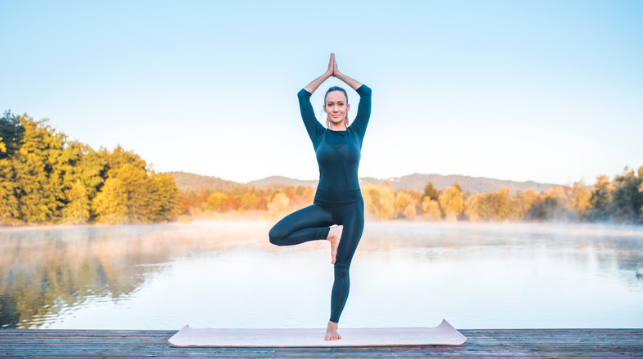
Vrikshasana adds a balance challenge while keeping the movement slow and controlled. It can be a useful addition when practising yoga for heart health as part of a gentle routine.
How to do it: Stand tall and place the sole of one foot against your inner calf or thigh. Join your palms at your chest, or overhead if comfortable, and breathe slowly. With high BP, keep them at your chest.
How it helps:
- Improves balance and concentration.
- Encourages steady breathing while holding a pose.
-
Builds gentle strength in the legs.
3. Vajrasana
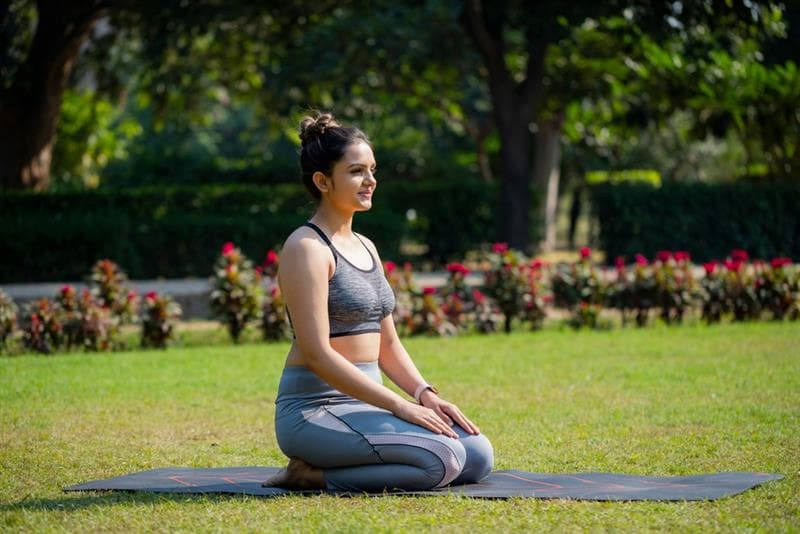
Vajrasana gives you a comfortable seated position for slowing your breathing and preparing for relaxation.
How to do it: Kneel and sit back on your heels with your spine upright. Place your hands on your knees and breathe slowly.
How it helps:
- Encourages calm, steady breathing.
- Helps promote relaxation and stress management.
- Supports a calm state that may benefit heart health.
4. Bhujangasana
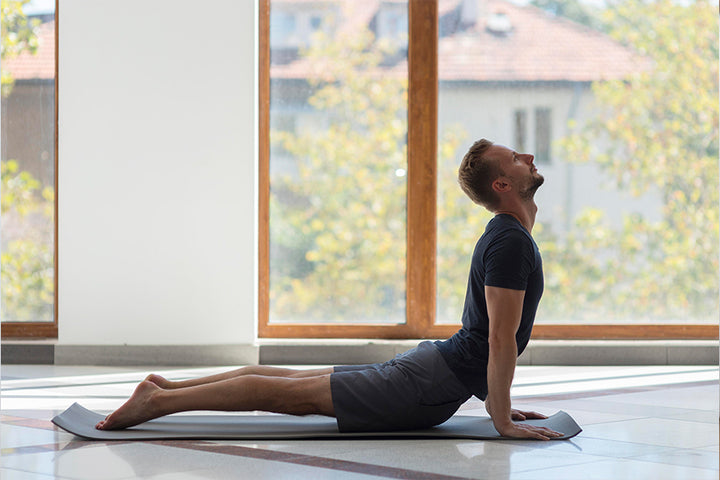
Bhujangasana gently opens the front of the body and brings more awareness to your breathing.
How to do it: Lie on your stomach with your palms under your shoulders. Slowly lift your chest while keeping your elbows slightly bent. Do not force the stretch.
How it helps:
- Gently opens the chest and shoulders.
- Strengthens the back muscles.
-
Helps you practise controlled movement with your breath.
5. Setu Bandhasana

Setu Bandhasana is a gentle backbend that opens the chest and encourages steady breathing, making it a useful pose for a calm, heart-friendly yoga routine.
How to do it: Lie on your back with your knees bent and feet flat on the floor. Slowly lift your hips while keeping your shoulders relaxed. Lower yourself gently.
How it helps:
- Strengthens the legs and lower back.
- Adds gentle movement to your routine.
- Encourages controlled breathing during exercise.
6. Baddha Konasana
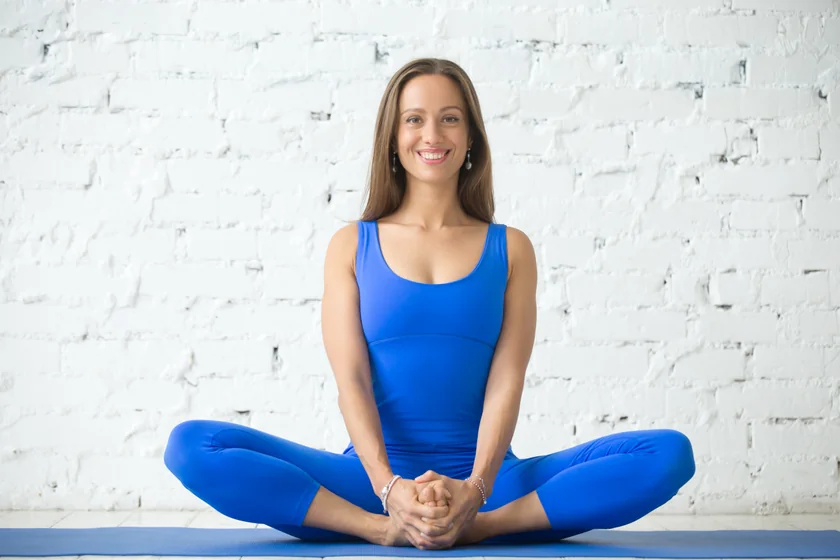
Baddha Konasana is a gentle seated pose that opens the hips and can be a calming part of your yoga for heart health routine.
How to do it: Sit upright with the soles of your feet together. Hold your feet or ankles and let your knees relax outward. Keep your spine comfortable and breathe slowly.
How it helps:
- Gently opens the hips and inner thighs.
- Provides a calm seated position for breathing.
- Encourages relaxation without strenuous movement.
7. Balasana

Balasana works as a resting pose when you need to slow down between movements.
How to do it: Kneel and sit back on your heels. Fold your body forward and rest your forehead on the floor or a cushion. Keep your arms relaxed.
How it helps:
- Helps relax the back, neck and shoulders.
- Gives your body a break between poses.
- Encourages slower, calmer breathing.
Once you are comfortable with these poses, you can combine them into a short daily routine.
A Simple 20-Minute Daily Yoga Routine
This routine uses the seven poses above to make yoga for heart health simple to follow at home.
Move slowly, breathe comfortably through your nose, never hold your breath, and stop if any pose causes pain or discomfort.

Start with shorter holds if you are new to yoga, then build up gradually over a few weeks. Practising four or five days a week can help you turn these poses into a regular routine.
Safe Yoga for Beginners and Heart Patients
You do not need to be flexible before starting yoga. Gentle poses such as Hatha and Iyengar are good starting points, while chair yoga suits older adults or people who find floor exercises difficult.
Yoga for heart health can be safe when the style and pace suit your condition. However, speak to your cardiologist before starting if you have heart disease, particularly after a heart attack, stent placement or bypass surgery.
Dr. Mehta Hospitals advises people with heart conditions to avoid practices that can raise blood pressure or put extra strain on the chest.
|
Practice to Avoid |
Why It's Risky |
|
Headstand and Shoulder Stand |
These inversions can sharply raise pressure in the head and chest. |
|
Hot or Bikram Yoga |
Heat can cause dehydration and increase heart rate. |
|
Fast Surya Namaskar |
A fast pace can raise heart rate suddenly. |
|
Breath Holding |
Long breath retention can reduce oxygen and strain the heart. |
|
Forceful Breathing (Kapalbhati) |
It can raise blood pressure, so avoid it unless your doctor approves. |
If you feel chest pain, dizziness or unusual breathlessness during a pose, stop and rest. Seek medical help if the symptoms continue.
Yoga vs Cardio for Heart Health
Yoga calms and stretches the body, while cardio keeps your heart working at a steady pace for longer. Yoga for heart health works best alongside regular aerobic exercise, so here’s how the two compare.
|
Factor |
Yoga |
Cardio (walking, cycling, swimming) |
|
Main focus |
Flexibility, balance, breathing and relaxation |
Sustained aerobic workout for the heart |
|
Intensity |
Gentle to moderate |
Moderate to vigorous |
|
Heart benefit |
Helps manage stress and blood pressure |
Builds heart and lung endurance |
|
Best time |
Evening, to unwind |
Morning, to energise |
|
Suits |
Beginners, stress relief, recovery days |
Building stamina and fitness |

Aim for at least 150 minutes of moderate activity each week, with regular yoga if comfortable. A morning walk and evening yoga can help you fit both into your day.
How to Build a Regular Yoga Habit?
Start with a yoga routine that fits easily into your day and feels comfortable to follow. With regular practice, you may notice better sleep, a calmer mood or less stiffness within the first few weeks.
Changes in blood pressure and cholesterol can take longer, so focus on building a routine you can stick to rather than trying difficult poses. Regular shorter sessions are easier to maintain than one long session at the weekend.
Yoga is just one part of a heart-friendly lifestyle. Your diet matters too, and choosing balanced meals alongside regular exercise can help support overall heart health.
This heart-friendly Indian diet chart can help you plan balanced meals alongside your exercise routine.
Some people also include supplements in their daily routine. These should complement healthy habits rather than replace a balanced diet, regular exercise or prescribed treatment.
How Does Healeo Healthy Heart Drops Support Your Routine?

Healeo Healthy Heart Drops contain arjuna, CoQ10, L-carnitine, garlic, grape seed extract, resveratrol, and vitamins D3, K2, B6, B12, and folic acid.
Take two droppers under your tongue once a day, alongside your usual diet and exercise routine.
Before adding any supplement to your routine, it is important to consider possible interactions.
Vitamin K2, garlic and CoQ10 can interact with blood thinners. If you take heart or blood pressure medicines, speak to your doctor before using the product.
Conclusion
Yoga for heart health can support stress management, healthy blood pressure and regular movement when practised consistently.
It cannot clear blocked arteries or replace prescribed medicines, but it can be one part of a broader heart-care routine.
Start with the 20-minute routine, add regular walks and check with your doctor before beginning yoga if you have a heart condition.
For additional daily support, explore Healeo Healthy Heart Drops and see how they can fit alongside your existing heart-health routine.
FAQs
1. Does yoga really improve heart health?
It can, although the benefits may be modest and build over time. A review of 64 trials found that regular yoga was associated with lower blood pressure and LDL cholesterol, along with small improvements in blood sugar.
It works best as part of an overall heart-healthy routine that includes activities such as walking and a balanced diet.
2. Which yoga is best for heart health?
Gentle styles such as Hatha, Iyengar and chair yoga can suit beginners and older adults. Calming practices such as Anulom Vilom and Bhramari can also be included.
If you have a heart condition, ask your doctor which practices are suitable.
3. Can heart patients do yoga after a heart attack?
Many people can return to gentle exercise after a heart attack once their cardiologist confirms it is safe.
The Indian Yoga-CaRe programme helped patients return to daily activities sooner. Start only with medical approval and follow the pace recommended for you.
4. Can yoga help remove heart blockages?
No, yoga for heart health cannot clear a blocked artery. The small improvements seen in one famous study came from an intensive programme that also included a very low-fat diet and group support.
Anyone with a blockage needs proper medical treatment from a cardiologist.
5. Can kapalbhati remove heart blockage?
No. Kapalbhati cannot remove a blockage, and its forceful breathing may raise blood pressure. People with heart disease or high BP should avoid it unless their doctor approves it.
6. Can yoga reduce high blood pressure?
Regular yoga can lower systolic blood pressure by a few points in some people. It should be used alongside prescribed BP medicines, healthy eating and regular physical activity rather than as a replacement.
7. Is hot yoga good for heart health?
Hot yoga can cause dehydration and raise heart rate, so it may not be suitable for people with heart conditions.
Gentle yoga in a normal-temperature room is a simpler option for regular practice.
8. Is yoga better than cardio for the heart?
They provide different benefits. Yoga is not a replacement for aerobic exercise, while walking, cycling and swimming help improve cardiovascular fitness.
Including both can give you a more balanced routine.
9. How often should I do yoga for heart health?
Four or five sessions a week for 20 to 30 minutes can be a practical routine for beginners. Regular shorter sessions may be easier to maintain than one long session at the weekend.
10. Can yoga help with heart anxiety?
Yoga and slow breathing can help calm the body's stress response. Practices such as Bhramari and Shavasana may help you relax.
If anxiety is persistent or affecting daily life, speak with your doctor.
11. What is in Healeo Healthy Heart Drops?
The Healeo Healthy Heart Drops contain arjuna, CoQ10, garlic extract, grape seed extract, L-carnitine, resveratrol and vitamins D3, K2, B6, B12 and folic acid.
As a dietary supplement, they are intended to complement healthy habits and should be used alongside any prescribed care.
12. Can I take Healthy Heart Drops with my heart medicines?
Speak to your doctor before starting the supplement, particularly if you take blood thinners, BP medicines or statins.
Ingredients such as vitamin K2 may interact with some medicines. The drops should never replace prescribed treatment.