




Is muesli good for weight loss, or is it another health food that quietly works against you? Both, depending on which pack you pick up.
Walk into any store and the health aisle is full of muesli, all of it promising a lighter body.
Some packs hold nothing but oats, nuts and seeds. Others hold as much sugar per 100 grams as a packet of biscuits, sitting under the same word and costing twice as much.
Anyone asking whether muesli is good for weight loss wants a straight answer, so here it is. Yes, if the pack is plain and the portion is measured.
This guide covers what muesli actually is, why muesli is good for weight loss when you pick the right pack, how to read an Indian label, and how to fit it into a normal morning.
At a Glance
|
Question |
Quick answer |
|
Does muesli help with weight loss? |
Yes, when it is plain, portioned right and paired with protein |
|
Best time to eat it |
Morning, when it keeps you full until lunch |
|
How much per day? |
40 to 60 grams per serving, weighed rather than poured |
|
Is it better than oats? |
Both work; muesli has more variety, and oats are simpler. |
|
Can diabetics eat it? |
Yes, if it carries no added sugar and comes with protein |
|
What to pair it with |
Plain curd, warm low-fat milk or a small handful of nuts |
|
The one thing to check |
Added sugar per 100 grams on the back of the pack |
Muesli vs Granola: What Is the Difference?
[Source: The Kitchn]
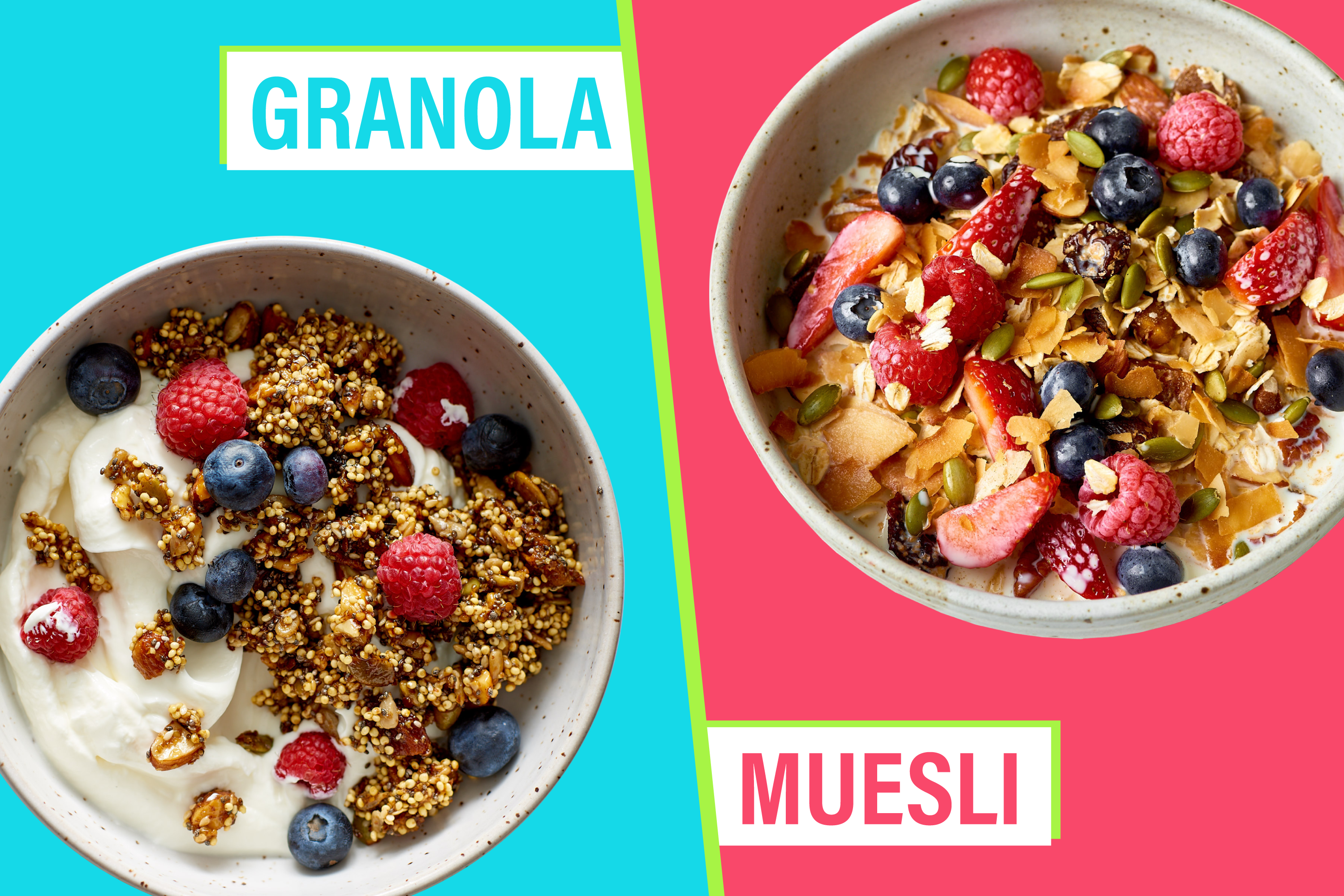
Muesli is a raw cereal made from rolled oats, mixed grains, dried fruit, nuts and seeds. It is neither cooked nor baked, so nothing is added to hold it together.
Granola looks similar but is baked with oil, honey or sugar. It tastes better and lands around 450 to 490 kcal per 100 grams, well above plain muesli.
Flavoured breakfast cereal is a different thing again, heavily processed, high in sugar and low in fibre.
The trouble in India is that plenty of packs labelled muesli are closer to granola.
Honey-roasted oat clusters, sugar-coated dried fruit and chocolate bits all appear under the same name.
A good muesli lists whole oats, raw nuts, seeds and unsweetened dried fruit right at the top.
That gap between the front label and the contents is why muesli is good for weight loss for one person and not for another.
Is Muesli Good for Weight Loss? What Does the Nutrition Say
Plain muesli gives you fibre, protein and slow-releasing carbohydrates with little or no added sugar. That combination is what makes it work in a fat loss diet.
Portion size still decides the outcome, because the calories per 100 grams are not low. Here is what 100 grams actually contains.
|
Nutrient |
Per 100g plain muesli |
What it does |
|
Calories |
Around 350 to 370 kcal |
Moderate, so the portion has to be measured. |
|
Dietary fibre |
7 to 10 g |
Keeps you full and supports digestion |
|
Protein |
8 to 12 g |
Reduces hunger and helps hold on to muscle |
|
Complex carbs |
55 to 65 g |
Releases energy slowly with no sudden crash |
|
Added sugar in sweetened packs |
Up to 20 g |
Spikes blood sugar and slows fat loss down |
Fibre is doing most of the work here. It slows digestion so you stay full longer, and it stops the mid-morning hunger that sends you towards biscuits with chai.
In a six-month analysis of the POUNDS Lost trial, higher fibre intake predicted greater weight loss and better diet adherence, independent of calorie intake.
The second reason is blood sugar. Plain muesli sits in the low to moderate glycaemic index range, so sugar enters the blood gradually.
You avoid the crash and the hunger that follow a sweet breakfast, which makes the rest of the day easier to control.

Is Muesli Good for Weight Loss for Everyone?
Muesli is not a magic food, and it does not suit every routine. Whether it helps or hurts comes down to the type you buy, the amount you eat and what goes with it.
Read both lists below and be honest about which one describes your morning.
It works for you when:
-
The pack is plain and unsweetened, with whole oats, nuts and seeds
-
You weigh the portion at 40 to 60 grams instead of pouring by eye
-
You pair it with curd, Greek yoghurt or low-fat milk for protein
-
You eat it in the morning, when the body can use the slow energy
It works against you when:
-
You pick a honey or fruit variant carrying 15 to 20 grams of added sugar
-
You eat a 200 gram bowl, which pushes one meal past 700 calories
-
You pour sweetened milk over it or stir in honey, sugar or jaggery
-
You treat it as free food and stop measuring the portion at all
Is Muesli Good for Weight Loss? Read the Pack First
Brand names matter less than labels, because most brands sell a clean version and a sugary one.
Whether muesli is good for weight loss for you often comes down to which one you pick off that same shelf.
Reading the back takes ten seconds and settles the question properly. Here is what to check, in order.
Added sugar per 100 grams: Indian packs declare total sugars and added sugars separately, as required under the FSSAI labelling rules.
Added sugar should read under 5 grams and ideally zero.

-
The first ingredient: Whole oats should lead the list. If corn, wheat or rice flakes come first, you are buying a cereal wearing a muesli label.
-
Words on the front: Fruit, honey and crunch almost always signal added sugar. No added sugar and unsweetened are the ones worth picking up.
-
Fibre and protein: Aim for at least 7 grams of fibre and 8 grams of protein per 100 grams. The cleaner Indian options clear both marks comfortably.
Flip the pack before you flip the price tag. The sugar figure tells you more in ten seconds than the entire front of the box.
How Does Muesli Fit Into the Indian Breakfast Routine?
Most Indian households start the day with poha, upma, idli, paratha or bread and eggs. Muesli is newer here, so the real test is whether it survives a normal weekday morning.
Four combinations work well without adding effort or sugar to your breakfast.

-
With plain curd: Curd adds protein and live cultures, and observational studies link fermented dairy with better long-term weight outcomes.
-
With warm, low-fat milk: This is how most Indians eat it. Use plain cow milk or unsweetened plant milk and add nothing else.
-
Soaked overnight: Soak it in milk or curd the night before. It digests more easily and is ready in seconds.
-
With fresh fruit: Papaya, banana or guava bring natural sweetness, which beats sweetened dried fruit every single time.
None of that is complicated, which is a large part of why muesli is good for weight loss in practice. The mistakes are just as simple and just as predictable.
People buy the best-selling brand without checking sugar. They eat muesli at dinner believing it burns fat overnight.
They stir in honey or jaggery to make it healthier or mix it into sweetened fruit yoghurt.
Is Muesli Good for Weight Loss Compared With Oats?
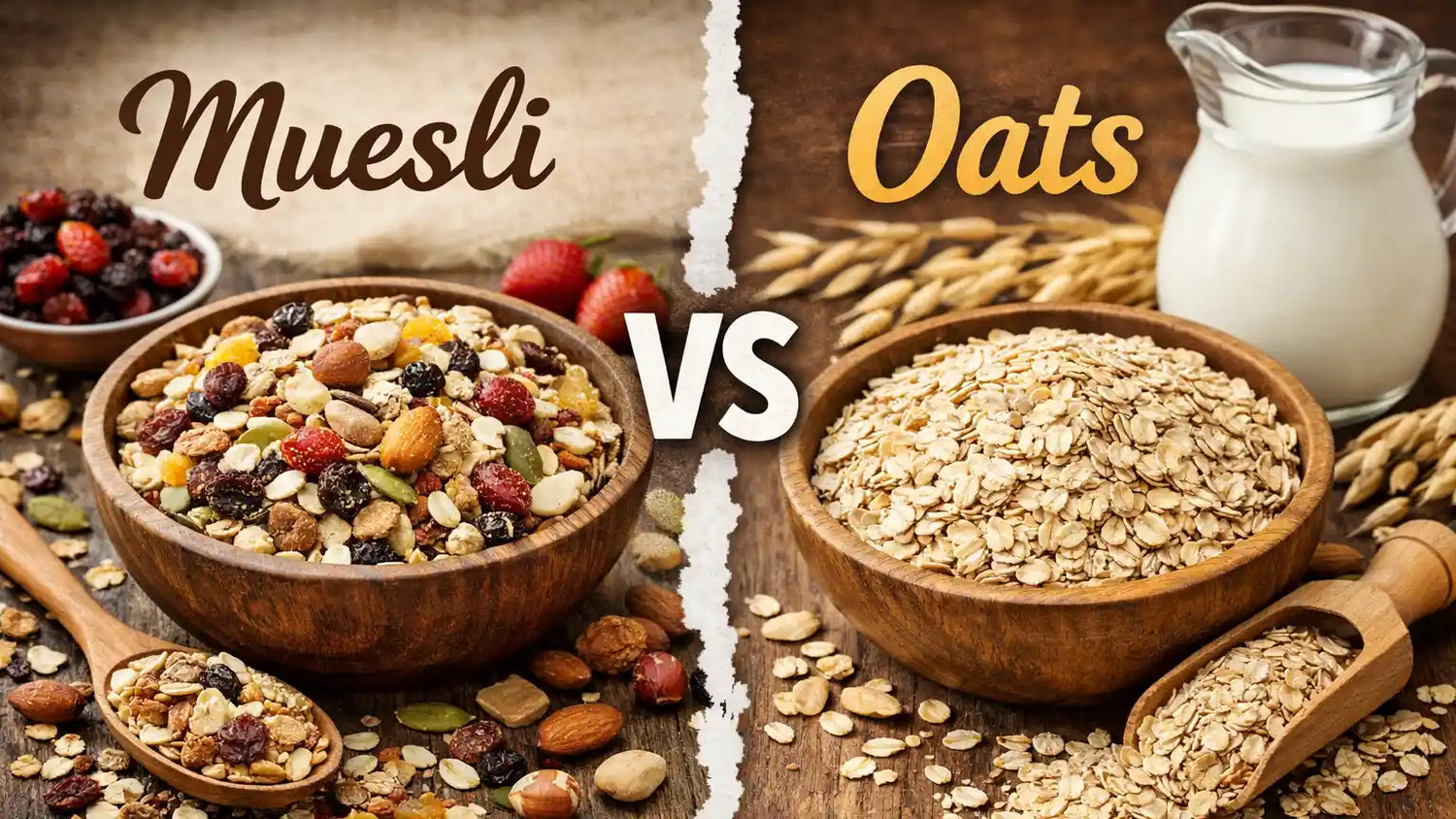
Both are solid choices, and the gap between them is smaller than most people assume. Oats carry slightly more protein and slightly fewer surprises on the label.
Muesli carries more variety and needs no cooking at all. Here they are side by side.
|
Factor |
Plain muesli |
Plain oats |
|
Calories per 100g |
Around 350 to 370 kcal |
Around 380 kcal |
|
Fibre |
7 to 10 g |
Around 10 g |
|
Protein |
8 to 12 g |
Around 13 g |
|
Glycaemic index |
Low to moderate |
Low, around 55 |
|
Variety |
High, mixed grains and nuts |
Low, a single grain |
|
Cooking needed |
No, ready to eat |
Yes, unless soaked overnight. |
|
Best for |
Convenience and flavour |
Simple and controlled nutrition |
Plain oats with water is probably the most controlled weight loss breakfast there is. But bland food gets skipped, and a skipped breakfast usually turns into a bigger lunch.
If that sounds like you, the question of whether muesli is good for weight loss stops being about nutrition.
It becomes practical, and muesli wins by a distance. Eating consistently matters more than eating perfectly.
Can You Take Muesli With Healeo Fat Burner Coffee?
Once the muesli bowl is sorted, some people like to pair it with something to sip alongside.
If you already drink coffee in the morning, a fibre-rich breakfast tends to sit better with a plain black cup than with another glass of sweetened milk.
Healeo Fat Burner Coffee is one option worth knowing about if you are exploring this route.
Each 10 gram serving carries MCT (2000 mg), L-Carnitine (500 mg) and Garcinia Cambogia (200 mg), along with CLA, green coffee bean extract and B vitamins.
L-Carnitine's role is to help ferry fatty acids into cells where they are used for energy, and the blend itself is plant-based, with no added sugar, dairy or gluten. It is not meant to replace a meal.
If you decide to try it, a scoop in hot water 20 to 30 minutes before breakfast, followed by your usual bowl of plain muesli with curd, is a simple way to fit it in.
Since it draws its caffeine from green coffee bean extract, just keep it in mind when totalling up your coffee for the day.
Conclusion
So is muesli good for weight loss? Yes, when you choose the right kind and eat it the right way.
Plain muesli with whole oats, nuts and seeds is one of the most practical breakfasts for a busy Indian morning. It keeps you full, keeps blood sugar steady and takes no cooking at all.
It only turns into a problem when the portion slips or a sugary pack passes as a health food. Check the label, weigh 40 to 60 grams and pair it with protein. Those three habits are the whole answer.
FAQs
1. Is muesli good for weight loss if eaten every day?
Yes, daily muesli works well for most people trying to lose weight. Keep the portion at 40 to 60 grams and pick a variant with no added sugar.
Pair it with curd or low-fat milk so the meal carries enough protein.
2. How many calories are in a bowl of muesli?
A 50 gram serving of plain muesli comes to roughly 175 to 185 calories. Adding 150 ml of low-fat milk takes the bowl to around 260.
Honey, sugar and coated dried fruit can push the same bowl past 400.
3. What is the best time to eat muesli for weight loss?
Morning is best, since it releases energy slowly through the first half of the day. It also prevents the mid-morning hunger that usually ends in snacking.
Dinner is the weakest slot, because you do not need that carbohydrate load before sleeping.
4. Is muesli good for weight loss if eaten at night?
It is not the best choice for a late meal. Muesli carries a fair amount of carbohydrate, which suits a morning far better than an evening.
If you want it at night, keep it to 30 grams with curd.
5. Is muesli good for weight loss compared with oats?
Both work well, and the nutritional gap between them is genuinely small.
Oats carry a little more protein and fibre, while muesli offers variety and needs no cooking. The better choice is the one you will actually eat every morning.
6. Which muesli is best for weight loss in India?
Look for whole oats as the first ingredient and no added sugar on the label. Plain and no fruit variants are the safest picks on any shelf.
The brand matters less than the variant, since most brands sell both versions.
7. Is muesli better with milk or curd?
Curd has the edge for anyone watching their weight. It adds protein and live cultures, keeps you full longer, and suits people who find milk heavy.
If you prefer milk, use plain low-fat or unsweetened plant milk instead.
8. Can diabetics eat muesli?
Yes, provided the pack carries no added sugar and no honey coating. Plain muesli raises blood sugar slowly rather than sharply, so pair it with curd and measure the portion.
Anyone on diabetes medication should confirm the portion size with their doctor first.
9. Is muesli good for weight loss for women with PCOD?
It can be a useful breakfast within a wider plan. The low to moderate glycaemic index helps keep blood sugar and insulin steadier through the morning.
Choose an unsweetened variety, pair it with protein, and treat it as one piece.
10. Does muesli cause bloating?
It can, if your usual diet is low in fibre right now. Start with a 30 gram portion and build up over a week or two.
Drinking enough water through the day also makes a noticeable difference.
11. What should I avoid adding to muesli?
Skip honey, sugar, condensed milk, flavoured yoghurt and fruit juice in the bowl.
Each one quietly adds 150 to 300 calories and undoes the steady blood sugar. Fresh fruit is the only sweetener worth adding to plain muesli.
12. Can muesli replace a full meal?
It works best as breakfast rather than as a stand-in for lunch.
One bowl does not carry enough protein or variety of nutrients for a full meal. Treat it as a smart morning option and build the other meals properly.