



A fatty liver diet plan is the first thing a doctor recommends after diagnosis, and the last thing they explain in enough detail.
Most people leave the clinic knowing they need to eat better but with no clear idea of what that means for someone eating dal, roti, and rice every day.
This guide is specifically for people who have just been diagnosed with fatty liver, Grade 1 or Grade 2, and want to know exactly which Indian foods help, which ones need to go, and how to make changes that are actually sustainable in a real Indian kitchen.
At a Glance
|
What You Need to Know |
Quick Answer |
|
Who is this for? |
Newly diagnosed NAFLD Grade 1 and Grade 2 |
|
Biggest dietary change |
Remove maida and packaged fructose first. |
|
Best Indian foods for liver |
Moong dal, amla, haldi, methi, karela, palak |
|
Foods to cut immediately |
Packaged juice, maida, vanaspati, alcohol |
|
How long before results |
4 to 8 weeks of consistent dietary changes |
|
Daily water intake |
Minimum 2.5 to 3 litres |
Why Diet Is the First Treatment for Fatty Liver?

A fatty liver diet plan is not optional advice. For Grade 1 and Grade 2 NAFLD, diet is the primary treatment.
There is no approved medication that directly reverses fatty liver.
What reverses it is removing the dietary triggers that caused fat to accumulate in liver cells and replacing them with foods that support liver cell repair.
The liver is one of the only organs in the body that can genuinely regenerate itself when given the right conditions. The right conditions start with food.
Clinical evidence consistently shows that a 7 to 10 percent reduction in body weight through dietary changes produces measurable reductions in hepatic fat within 8 to 12 weeks.
For most newly diagnosed patients, this does not require dramatic calorie restriction.
It requires removing the specific foods that are overloading the liver daily and replacing them with foods the liver can actually process efficiently.
What to Remove First: The Non-Negotiables
Before adding any new foods, these need to come out.
Continuing to eat them while adding liver-supportive foods is the most common reason people see no improvement despite trying.
|
Food |
Why It Directly Harms the Liver |
|
Packaged fruit juice and cold drinks |
Pure fructose with no fibre, processed entirely by the liver and converted to fat |
|
Maida in all forms: bread, biscuits, namkeen, pav |
Drives de novo lipogenesis (the process by which the liver converts excess carbohydrates into fat) |
|
Vanaspati and Dalda |
Trans fats that directly promote hepatic inflammation (liver cell inflammation) |
|
Alcohol in any quantity |
Toxic to liver cells even in small amounts in existing NAFLD |
|
Sweetened chai more than once daily |
Hidden sugar load that adds up faster than most people realise |
|
Packaged and instant foods |
High sodium, refined flour, and preservatives that worsen the liver's metabolic burden |
The single most impactful change for most Indian patients is eliminating packaged fruit juice.
It is perceived as healthy, but a 200ml tetra pack of mango juice delivers 20 to 28 grams of fructose with no fibre to slow absorption.
The liver has no mechanism to moderate fructose intake. All of it arrives at once and gets converted to fat.
Replacing juice with whole fruit or plain water is one of the most immediate improvements a newly diagnosed patient can make.
The Best Indian Foods for a Fatty Liver Diet Plan
The good news for Indian patients is that traditional Indian cooking already contains some of the most liver-supportive foods available.
The problem is not Indian food itself. It is the shift toward refined, packaged, and processed versions of Indian staples that has created the problem.
Moong Dal

Moong dal is the most liver-friendly dal in the Indian kitchen.
It is high in protein, low on the glycaemic index, and provides methionine (an amino acid that is a key building block for SAMe, which stands for S-adenosylmethionine, a compound essential for liver detoxification pathways).
It is easy to digest, does not produce the gas and bloating that heavier dals can cause, and works as a complete protein source for vegetarian patients who are reducing their refined carbohydrate intake.
How to use it: Replace heavier dals like chana dal or rajma at dinner with light moong dal soup. It is easier on the liver overnight when the organ is doing its most intensive repair work.
Amla (Indian Gooseberry)

Amla is arguably the most liver-protective food in the Indian diet. It is one of the richest natural sources of Vitamin C and polyphenols, both of which support glutathione synthesis in the liver.
Glutathione is the liver's primary antioxidant, and fatty liver consistently depletes it.
Without adequate glutathione, the liver cannot protect itself from the oxidative damage that drives disease progression.
Research published in the Journal of Ethnopharmacology found that amla extract demonstrated significant hepatoprotective effects, reducing liver enzyme levels and oxidative stress markers in animal models of fatty liver.
How to use it: Half a teaspoon of amla powder in warm water first thing in the morning before breakfast.
Raw amla eaten directly if available. Avoid commercially packaged amla juice, which often contains added sugar.
Haldi (turmeric) with Kali Mirch (black pepper)

Curcumin, the active compound in haldi, is one of the most studied anti-inflammatory compounds in clinical nutrition.
Multiple studies have demonstrated that curcumin reduces liver inflammation and hepatic fat accumulation in NAFLD patients.
The critical detail is that curcumin has very poor bioavailability on its own.
Combining it with black pepper, which contains piperine, increases curcumin absorption by up to 2000 percent.
How to use it: Add haldi and kali mirch to sabzi, dal, and soups daily.
Haldi doodh with a pinch of black pepper made with low-fat milk is one of the most practical daily habits for liver recovery.
Methi Dana (Fenugreek Seeds)

Methi dana works through two mechanisms relevant to fatty liver. Its soluble fibre slows glucose absorption after meals, reducing the glycaemic load that reaches the liver and drives fat accumulation.
Its saponins (bioactive plant compounds) have demonstrated direct liver-protective activity in animal studies, reducing hepatic fat and inflammatory markers.
How to use it: Soak one teaspoon of methi dana overnight and eat them on an empty stomach in the morning.
Add methi leaves to roti dough or sabzi regularly. Methi paratha made with minimal ghee is one of the better breakfast options for liver health.
Karela (Bitter Gourd)
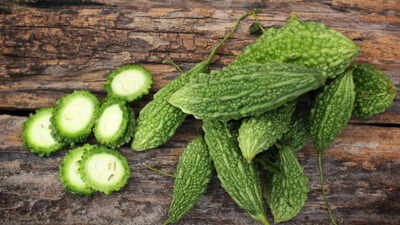
Karela is one of the most underrated foods in the fatty liver diet plan.
It contains charantin and polypeptide-p, two compounds that improve insulin sensitivity (the body's ability to respond to insulin efficiently).
Insulin resistance is one of the primary drivers of hepatic fat accumulation, so improving it directly reduces the liver's fat load over time.
How to use it: Karela sabzi made dry with minimal oil twice a week.
Karela juice on an empty stomach, diluted and without added salt or sugar, for patients who can tolerate the bitterness.
Palak and Leafy Greens
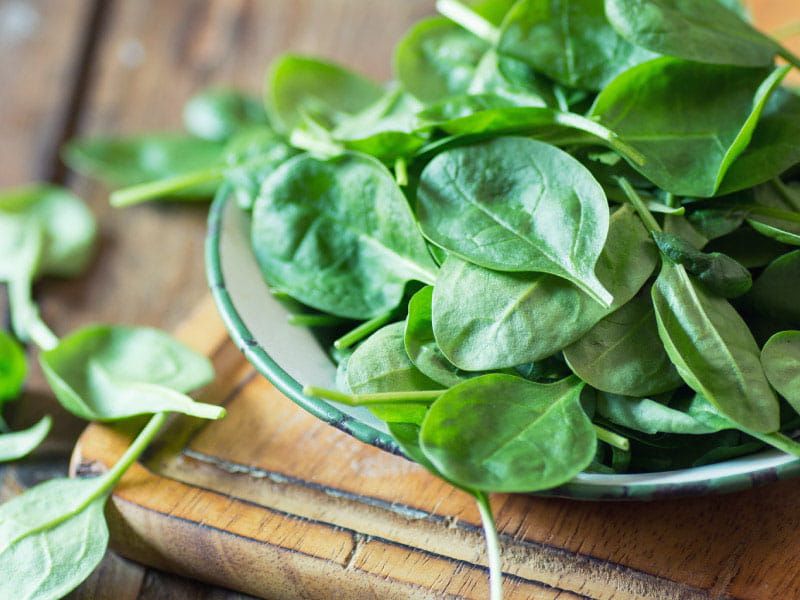
Source: American Heart Association News
Palak, methi leaves, and other leafy greens provide folate and chlorophyll, both of which support the methylation pathways the liver uses for detoxification.
They are high in fibre, low in calories, and contribute to the sustained satiety that reduces overall calorie intake without requiring active restriction.
How to use it: Palak dal twice a week. Palak sabzi dry at dinner.
Adding a handful of palak to moong dal soup increases nutritional density without changing the flavour significantly.
Jowar, Bajra, and Millets

Replacing refined wheat (maida) and reducing white rice portions is one of the core structural changes in any fatty liver diet plan.
Jowar roti, bajra roti, and millet-based preparations are lower on the glycaemic index, higher in fibre, and do not trigger the same degree of post-meal blood sugar spikes that white flour does.
How to use it: Replace maida roti with jowar or bajra roti at both lunch and dinner. Replace one white rice meal per day with a small portion of millet khichdi or brown rice.
7-Day Fatty Liver Diet Plan: Your First Week Meal by Meal
This 7-day fatty liver diet plan is designed for someone in their first week after diagnosis. The goal is not perfection.
It is removing the biggest triggers and building two or three positive habits that stick beyond day seven.

What to expect by Day 7?
Most people notice reduced bloating, a lighter feeling after meals, and less post-lunch energy crash.
These are not placebo effects. They are the direct result of the liver receiving less fructose, less refined flour, and more fibre and protein than it has been used to processing daily.
For a longer structured plan beyond the first week, the Healeo 21-Day Fatty Liver Diet Plan covers the full three-phase approach with week-by-week therapeutic food introductions.
Is There a Specific Fatty Liver Diet Plan for Women?
Yes, and it matters more than most generic advice acknowledges. Women with fatty liver, particularly those with PCOS (Polycystic Ovary Syndrome), are dealing with a double metabolic challenge.
PCOS causes insulin resistance, which directly drives hepatic fat accumulation, and fatty liver worsens insulin resistance in return.
Women going through perimenopause or post-menopause are also at higher risk because oestrogen loss reduces the liver's natural fat-processing efficiency.
Post-menopausal women should prioritise protein at every meal, a minimum of 20 grams, to compensate for the muscle loss that accompanies oestrogen decline and slows overall metabolic rate.
Is the Mediterranean Diet Good for Fatty Liver?
The Mediterranean diet is one of the most researched dietary patterns for NAFLD, and the evidence supporting it is strong.
It emphasises olive oil, fish, legumes, vegetables, whole grains, and minimal red meat and refined carbohydrates, all of which directly support liver recovery.
However, for Indian patients, a Mediterranean diet is impractical as a daily eating pattern. Olive oil is expensive and unfamiliar. Fish twice a week does not fit vegetarian households.
The grain base of Mediterranean eating does not translate easily to Indian cooking habits.
The good news is that a well-structured Indian fatty liver diet plan achieves the same metabolic outcomes through culturally appropriate equivalents.
Mustard oil in small quantities replaces olive oil. Moong dal and chana dal replace legumes. Jowar and bajra replace whole grains.
Amla, haldi, and karela provide antioxidant and anti-inflammatory compounds that have no direct Mediterranean equivalent but perform the same liver-protective function.
Support Your Liver Every Morning: Healeo Liver Detox Coffee

A fatty liver diet plan handles what goes on the plate. What most newly diagnosed patients do not realise is that the morning drink matters equally.
Sweetened chai or packaged coffee first thing in the morning sends a sugar spike to a liver that has been fasting overnight and is in the middle of its longest recovery window of the day.
Replacing that first drink with something that actively supports liver recovery makes a measurable difference.
Healeo Liver Detox Coffee is formulated specifically for this and contains Milk Thistle (Silymarin), which is the most extensively researched hepatoprotective botanical compound available.
Multiple controlled trials have shown measurable reductions in ALT and AST in NAFLD patients.
It also contains Dandelion Root, which stimulates bile production and activates liver detoxification enzyme pathways, and Chicory Root, a natural prebiotic that supports the gut-liver axis.
No sugar. No artificial additives. One cup 20 minutes before breakfast gives the liver's active compounds the window they need to work before the first meal arrives.
Used daily alongside the dietary changes in this guide, it addresses the nutritional angles that food alone cannot always cover in the early weeks of a fatty liver recovery plan.
Conclusion
A fatty liver diet plan for Indian patients does not require giving up Indian food.
It requires going back to the version of Indian food that existed before packaged snacks, refined flour, and bottled juice became daily habits.
Moong dal, amla, haldi, methi, karela, and palak are not exotic health foods.
They are ingredients that have been in Indian kitchens for generations, and the reason they keep appearing in liver health research is that they genuinely work.
The first week is the hardest. Remove the biggest triggers, add one or two therapeutic foods daily, and let the liver begin its own repair process.
It is designed to do exactly that, as long as the dietary conditions allow it.
Get blood work done before starting. ALT, AST, and a fasting lipid profile. Repeat at 8 weeks. The numbers will confirm what the body is already beginning to feel.
FAQs
1. What is the best fatty liver diet plan for Indians?
A fatty liver diet plan built around traditional Indian whole foods works best for Indian patients.
The core principles are replacing maida with jowar or bajra roti, eliminating packaged juice and sweetened drinks, adding amla, haldi, methi, and moong dal daily, and finishing dinner before 7:30pm to give the liver a longer overnight recovery window.
2. Which dal is best for fatty liver?
Moong dal is the best option. It is the easiest to digest and the highest in methionine, which supports liver detox pathways.
The lowest on the glycaemic index among common Indian dals. Light moong dal soup at dinner is one of the most liver-supportive evening meals.
3. Is rice allowed in a fatty liver diet plan?
Small portions of brown rice are allowed. The issue with white rice is portion size and frequency, not rice itself.
Half a cup of brown rice alongside dal and sabzi is within a healthy range.
Large portions of white rice eaten daily are a problem because they spike blood sugar and increase the liver's fat processing burden.
4. Can I eat paneer with fatty liver?
Yes, in moderation. 75 to 100 grams of low-fat grilled or lightly cooked paneer provides high-quality protein that supports liver recovery without overloading it.
Avoid paneer in heavy cream or butter-based gravies, as the saturated fat load adds an unnecessary hepatic burden.
5. Is ghee allowed in a fatty liver diet?
One teaspoon of pure desi ghee per meal is acceptable. Ghee provides butyrate, which supports gut lining health and the gut-liver connection.
Large quantities used as a cooking medium, smeared generously on multiple rotis, or added to rice regularly are what cause problems.
6. How long does it take for a fatty liver diet to show results?
Most people notice reduced bloating and improved energy within the first two weeks of removing packaged juice, maida, and sweetened drinks.
Measurable improvements in liver enzyme levels on blood tests typically appear between 4 and 8 weeks of consistent dietary changes.
Ultrasound-visible fat reduction takes 8 to 12 weeks minimum.
7. Is banana good or bad for fatty liver?
Banana is acceptable in moderation, one small banana per day at most, eaten after a meal rather than on an empty stomach.
Its natural sugar content is moderate, and its fibre slows absorption. Eating multiple bananas daily or drinking banana-based packaged drinks is not advisable.
8. What should I drink if I have fatty liver?
Detox drinks like warm lemon water or diluted amla water in the morning, plain water through the day at a minimum of 3 litres, unsweetened green tea or jeera water as alternatives to chai, and clear soups at dinner.
All packaged drinks, including fruit juice labelled as natural or fresh, should be eliminated.
9. Can stress make fatty liver worse even with a good diet?
Yes. Chronic stress raises cortisol levels, which directly increases visceral fat accumulation and insulin resistance, both primary drivers of hepatic fat.
A good diet slows the damage but does not fully compensate for unmanaged chronic stress.
Sleep of 7 to 8 hours and a 20-minute walk after dinner are not lifestyle extras in a fatty liver recovery plan. They are part of the treatment.