




Knowing how to loosen mucus in lungs matters more in India than most people realise, because for a lot of us the problem never fully goes away.
Thick mucus sitting in the chest that will not shift. A rattling cough that lingers for weeks. Breathing that feels slightly harder than it should, even when you are doing nothing.
These are not minor inconveniences. For a large number of people, especially in cities with heavy pollution, this is simply the baseline.
At a Glance
|
Topic |
Quick Answer |
|
What is mucus? |
A protective gel lining the airways that traps dust, bacteria, and pollutants |
|
Healthy mucus colour |
Clear or white. Yellow, green, brown, or red signals a problem. |
|
Top remedies |
Steam inhalation, warm water, huff cough, honey and ginger, postural drainage |
|
Conditions linked to excess mucus |
Asthma, COPD, chronic bronchitis, allergies, smoking, GERD |
|
When to see a doctor |
Blood in mucus, green mucus beyond 10 days, fever, breathlessness at rest |
Most people assume thick mucus is just part of a cold or the changing season.
But often, the body is sending a much clearer signal than that.
In this blog, we cover what mucus actually is, what its colour tells you about your health, which conditions drive excess production, and the most effective, science-backed methods to loosen mucus in lungs and breathe freely again.
What Is Mucus and What Does It Do?
Mucus is a slippery, gel-like substance produced by the lining of the airways. Knowing how to loosen mucus in lungs properly begins here.
It works as the respiratory system's first line of defence, trapping dust, bacteria, pollutants, and allergens before they can reach deeper lung tissue.
Tiny hair-like structures called cilia sweep this mucus continuously upward and out of the lungs, usually without any conscious effort.
The process only becomes visible when mucus production increases and the system gets overwhelmed.
What Do the Colours Mean?
Healthy mucus is mostly clear or slightly white and has a thin, watery consistency. When something is off, the colour and texture change. Here is a quick guide:
Healthy colours:
-
Clear: Normal, healthy airways
-
White or pale grey: Mild congestion, usually from dry air or minor irritation
Colours that may signal a problem:
-
Yellow: The immune system is actively fighting an infection, usually viral
-
Green: Immune cells are active. Common in viral infections too, so not an automatic case for antibiotics
-
Brown or rust-coloured: Could indicate old blood or heavy exposure to smoke and pollution
-
Red or pink: Fresh blood is present. Needs medical attention promptly
-
Black: Seen in heavy smokers or those with extreme pollution exposure. Requires evaluation
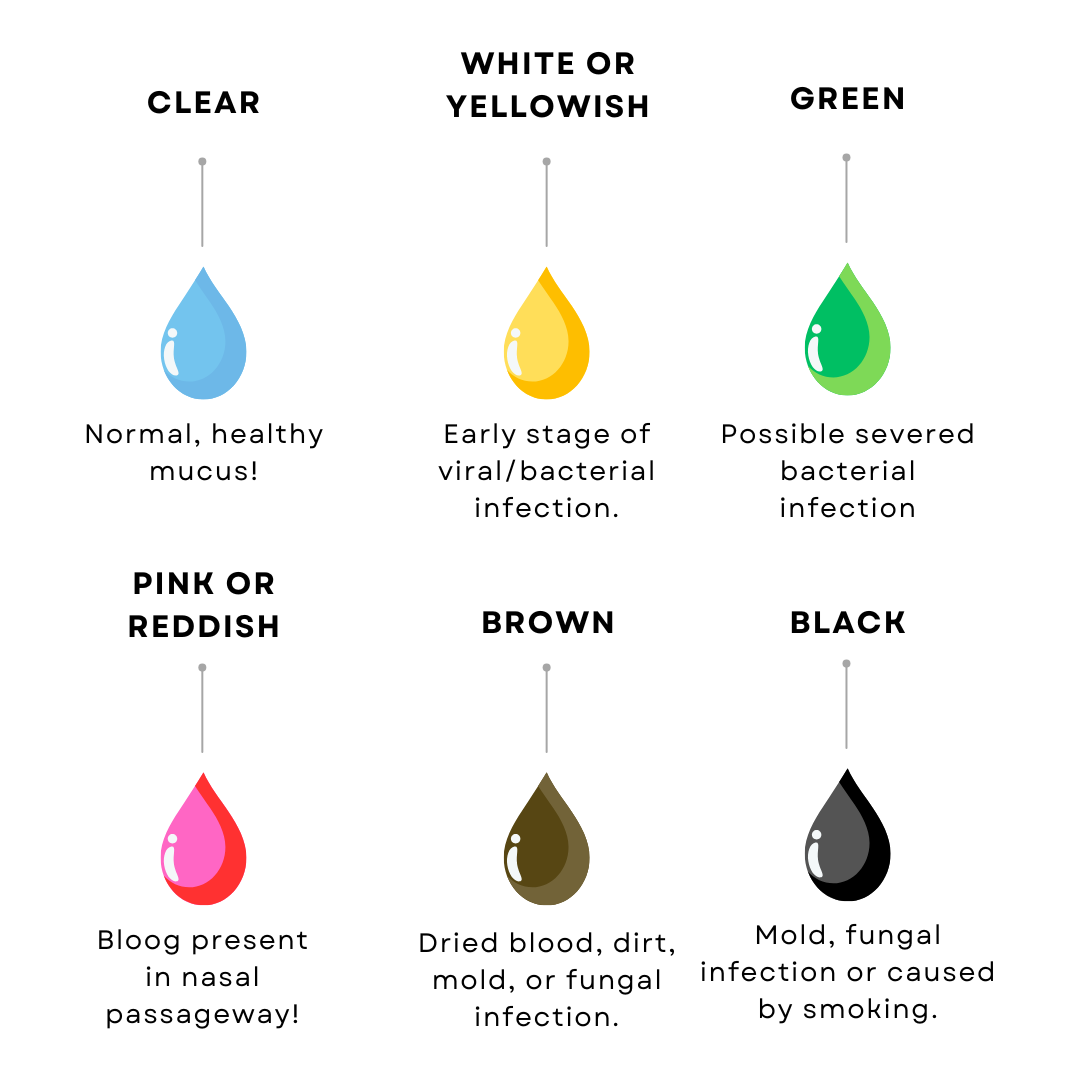
[Source: Florida Otolaryngology Group]
Colour alone does not confirm a diagnosis, but it gives a useful first signal about what may be happening in the airways.
If you are wondering how to loosen mucus in the lungs, then it is necessary to be able to identify which kind of mucus can be harmful.
What Causes Thick Mucus in the Lungs?
Thick lung mucus is usually a sign that the airways are irritated or inflamed.
The body increases mucus production as a protective response, but when that runs on overdrive, it creates congestion instead of protection.
Common triggers include air pollution, smoking, dry weather, dehydration, respiratory infections, and chronic conditions like asthma or bronchitis.
In India, the combination of urban pollution, dust, and seasonal changes makes this a widespread daily problem.
What Are the Conditions Linked to Excess Mucus in the Lungs?

Several conditions cause the lungs to overproduce mucus or make it harder to clear. (Source: American Lung Association)
-
Asthma: Triggers inflammation that narrows airways and increases mucus production
-
Chronic Bronchitis: Long-term bronchial inflammation with persistent mucus
-
COPD: A progressive condition where mucus clearance becomes significantly impaired
-
Respiratory infections: Colds, flu, and pneumonia all cause temporary but heavy mucus
-
Allergies: Dust, pollen, and pet dander prompt the airways to overproduce mucus
-
Smoking: Damages cilia over time, causing mucus to accumulate instead of clearing
-
GERD: Stomach acid reaching the throat can trigger excess mucus as a protective response
How to Loosen Mucus in Lungs: 10 Methods That Work
1. Stay Well Hydrated

[Source: Gold Coast Physical Therapy]
Dehydration is one of the most common reasons mucus thickens.
Drinking 8 to 10 glasses of warm water daily keeps mucus thin and mobile.
Adding ginger or turmeric brings extra anti-inflammatory support, something most Indian kitchens already have.
2. Use Steam Inhalation

[Source: Apollo 247]
Steam inhalation is one of the fastest ways to loosen mucus in the lungs at home.
Ten minutes over a bowl of hot water with a towel over the head softens mucus and opens the airways quickly.
A few drops of eucalyptus oil help, though skip it for young children, for whom it is not considered safe.
3. Try the Huff Cough Technique

[Source: Lloyds Pharmacy]
For huff coughing, exhale sharply as if fogging up a mirror without straining, repeat 2 to 3 times, then follow with a gentle full cough.
Even 10 minutes of deep diaphragmatic breathing each morning can help loosen mucus in lungs and improve clearance through the day. (Source: NHS)
4. Honey and Ginger in the Morning

[Source: Teami Blends]
Honey and ginger together are among the most evidence-backed natural remedies for loosening mucus in lungs.
Ginger reduces airway inflammation and thins mucus secretions. Honey soothes bronchial tissue.
A warm drink combining both fits naturally into an Indian morning routine. (Source: PubMed)
5. Use Postural Drainage

[Source: betterhood]
Postural drainage is one of the more underused techniques to loosen mucus in lungs, and it works simply through gravity.
Lying on each side for 5 to 10 minutes shifts mucus toward the throat, where it is easier to clear.
Sleeping with the head slightly elevated also prevents overnight pooling in the airways.
6. Move the Body Daily

[Source: Klarity Health Library]
Regular physical activity increases respiratory rate and airflow, helping mucus move out naturally.
Yoga, specifically Anulom Vilom and Bhastrika, directly improves bronchial clearance and has been used in Indian tradition for centuries for exactly this purpose.
7. Adjust Diet and Indoor Air

[Source: Electrolux.vn]
Diet plays a bigger role in how to loosen mucus in lungs than most people realise.
Dairy, refined sugar, and fried foods all thicken mucus.
Replacing them with warm, plant-based foods and spices like turmeric, black pepper, and amla supports natural mucus regulation.
Keeping indoor air clean through ventilation and an air purifier reduces daily irritant load considerably.
Read about the top 10 best foods to cleanse lungs naturally.
8. Try Salt Water Gargling

[Source: GoodRx]
Salt water gargling does not directly reach the lungs, but it reduces post-nasal drip, one of the most underrated contributors to chest congestion.
Mucus dripping from the nasal passages adds to the load the lungs already have to manage.
Half a teaspoon of salt in warm water gargled twice a day clears this pathway and makes a consistent difference.
Read more about the best lung detox techniques here!
9. Use Tulsi and Mulethi (Licorice Root)

[Source: The Times of India]
Tulsi has been used for centuries in Indian households for chest congestion, and small studies suggest it eases airway inflammation.
Mulethi contains glycyrrhizin, which helps thin mucus and soothes throat irritation.
Keep it to a few weeks at a time rather than daily for months, because prolonged glycyrrhizin intake can raise blood pressure and lower potassium.
Anyone on blood pressure medication should check with a doctor first. (Source: Journal of Ethnopharmacology)
10. Manage Stress and Sleep Better

[Source: Sleep.ai]
Chronic stress raises cortisol, which increases airway inflammation and drives excess mucus production over time.
Poor sleep slows the body's repair processes and compounds the problem.
Ten minutes of meditation, Yoga Nidra, or slow breathing before bed can reduce this inflammatory load.
Sleeping on the side rather than the back also improves overnight mucus drainage.
A Simple Daily Routine for Clearer Lungs
Consistency beats intensity when it comes to respiratory health.
A simple daily routine built around a few of these methods works far better than doing everything intensively for three days and then stopping.

A practical starting point for most people:
-
Morning: Warm water with ginger and honey on an empty stomach, followed by 10 minutes of pranayama or diaphragmatic breathing
-
Midday: Stay hydrated with warm fluids; avoid cold beverages and heavy fried foods
-
Evening: Steam inhalation if congestion is present, salt water gargle before bed
-
Sleep: On the side, with the head slightly elevated
Even just three or four of these habits done daily make a measurable difference over two to three weeks.
When Should You See a Doctor?
Most mucus-related congestion clears on its own within a week or two. But these signs mean it is time to get professional advice rather than continuing with home remedies:
-
Mucus that is red, pink, or contains visible blood
-
Any cough with mucus lasting two weeks or longer, which in India is the standard trigger for a TB test, especially alongside evening fever, night sweats or weight loss
-
Fever alongside heavy chest congestion
-
Shortness of breath or difficulty breathing at rest
-
Chest pain or persistent wheezing that does not improve
-
Unexplained weight loss with an ongoing cough
-
Symptoms returning repeatedly over a short period
Catching these signs early makes a significant difference in outcomes.
How Does Healeo Lung Forte Help With Mucus and Respiratory Health?
Good habits go a long way.
But for someone dealing with daily pollution, recurring chest infections, or stubborn chest mucus that never fully clears, lifestyle changes alone may not be enough to fully restore lung function.

Healeo Lung Forte fills that gap.
It combines herbs that help loosen and clear mucus like Marshmallow Leaf, Vasaka, Licorice Root, and Stinging Nettle, with key nutrients like, Zinc, and vitamins like Vitamin C and Vitamin D, and Selenium.
It also contains NAC, one of the most researched compounds that break down thick mucus and help the airways expel mucus stuck in the airways more effectively.
It works alongside the habits in this guide rather than in place of them.
If you are on medication, pregnant, or managing a diagnosed lung condition, check with your doctor before adding any supplement.
Find out if Healeo’s Lung Forte has any side effects.
Conclusion
Knowing how to loosen mucus in lungs is about more than one congested morning.
It is about building consistent habits that keep the entire respiratory tract working at its best.
Hydration, steam inhalation, airway clearance techniques, anti-inflammatory foods, and good posture all work together to reduce phlegm buildup.
This helps create an environment where the lungs can clear themselves naturally.
For most people, two or three of these methods practised regularly bring real, lasting improvement in lung function and lung and airway health.
Anyone prone to chest congestion or recurring chest infections will find that consistency matters far more than any single remedy when it comes to how to loosen mucus in lungs.
Start simple, stay consistent, and let the results speak over time.
FAQs
1. What is the fastest way to loosen mucus in lungs naturally at home?
Steam inhalation with eucalyptus oil is the quickest method.
Ten minutes of warm steam softens thick mucus and opens airways almost immediately.
Following it with the huff cough technique clears the loosened mucus effectively.
2. Can warm water loosen mucus in lungs?
Yes. Warm water thins mucus and keeps it mobile so the lungs can clear it naturally. Sipping it throughout the day works better than drinking large amounts at once.
3. Is it normal to have mucus in the lungs every day?
Yes, some daily mucus is normal and healthy. It traps dust and irritants to protect the airways.
It becomes a problem only when it thickens and becomes hard to clear. [Sources: American Lung Association]
4. How does NAC help with mucus in the lungs?
NAC breaks the bonds that make mucus thick and sticky.
This process, called mucolysis, is clinically used in chronic respiratory conditions to improve clearance and ease breathing. [Sources: PubMed: NAC and Mucolysis]
5. Which foods should be avoided when dealing with excess mucus?
Dairy, refined sugar, fried foods, and cold beverages are the biggest triggers.
Cutting these and replacing them with warm fluids and spices like ginger and turmeric helps reduce mucus noticeably.
6. Does yoga help loosen mucus in lungs?
Yes. Pranayama practices like Anulom Vilom and Bhastrika increase airflow through the bronchial tubes and shift mucus toward the upper airways, where it can be expelled more easily. [Sources: NIH: Yoga and Respiratory Health]
7. Can air pollution make mucus worse?
Yes. Pollutants and particulate matter irritate the bronchial lining, triggering excess mucus production as a protective response.
This is a key reason chronic congestion is so common in Indian cities.
8. How long does it take to clear mucus from the lungs naturally?
Short-term congestion from infection or irritation usually improves within 5 to 7 days with consistent home remedies.
Chronic cases linked to ongoing inflammation can take several weeks to resolve fully.
9. Is Marshmallow Leaf good for lung health?
Yes. Marshmallow Leaf contains mucilage that coats and soothes irritated bronchial tissue.
It has long been used in herbal medicine for cough and mucus-related respiratory conditions. [Sources: WebMD: Marshmallow Root]
10. What is the role of Quercetin in respiratory health?
Quercetin reduces bronchial inflammation and stabilises the immune cells that trigger allergic responses.
It supports clearer airways and is found naturally in onions, apples, and targeted respiratory supplements. [Sources: PubMed: Quercetin and Lung Inflammation]
11. What are the signs of mucus buildup in the lungs?
A persistent wet cough, chest heaviness, rattling or wheezing sounds when breathing, and feeling short of breath even at rest are the most common signs.
Frequent throat clearing is another early signal.
12. What should I do if mucus in my chest won't come up?
Try steam inhalation followed by the huff cough technique.
Staying well hydrated and sleeping on your side also helps loosen stubborn chest mucus.
If it persists beyond two weeks, consult a doctor.
13. Is there a recipe to help clear the lungs in 3 days?
A warm drink of fresh ginger juice, raw honey, a pinch of turmeric, and black pepper taken twice daily can noticeably reduce mucus within 3 days when combined with steam inhalation and good hydration.
Results vary based on the severity of congestion.